
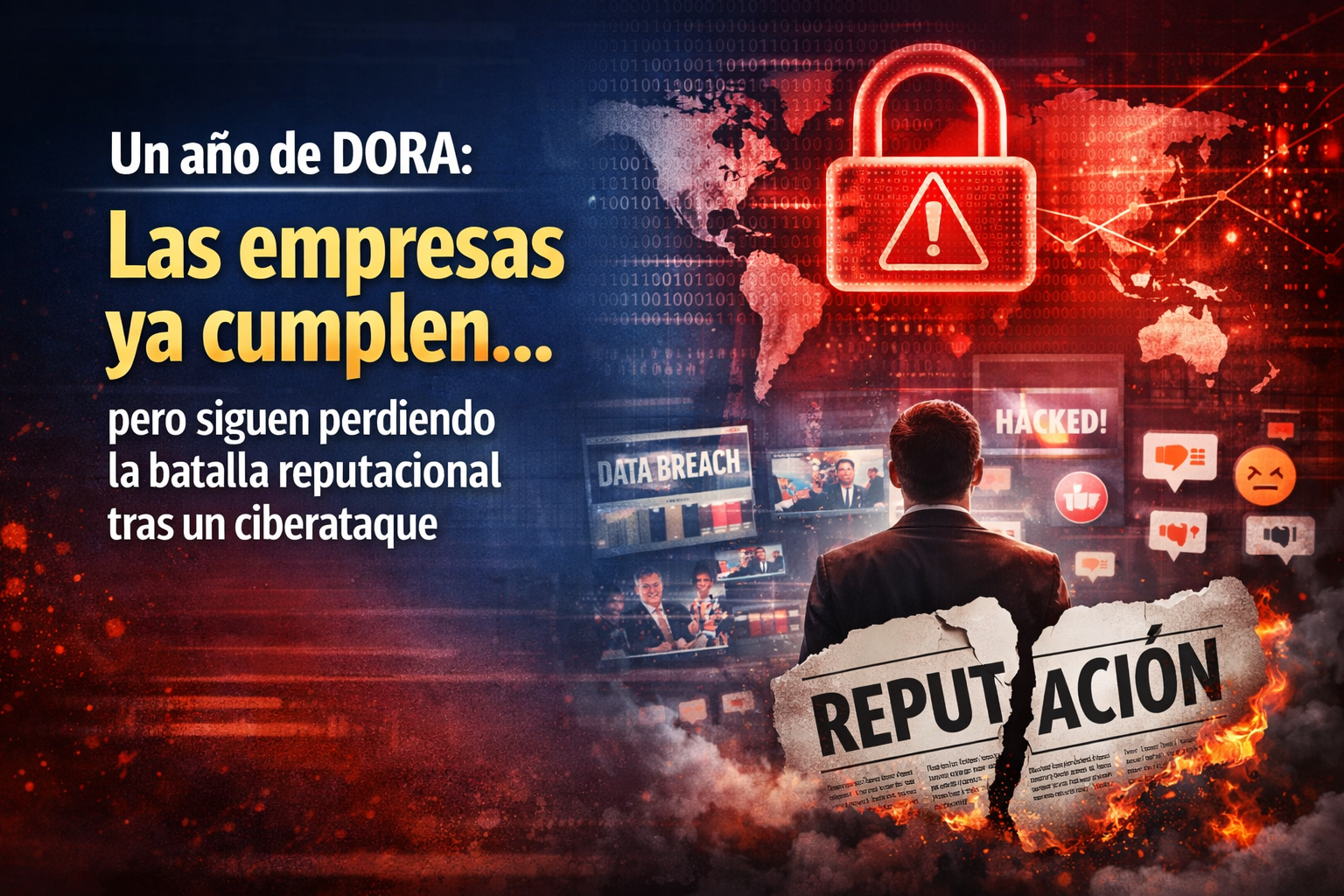
Over the past year, the digital resilience landscape in Europe has shifted radically. Since the full implementation of the DORA Regulation (Digital Operational Resilience Act), financial entities and their ICT providers no longer face just a technical challenge, but a new standard of reputational responsibility. During this past year, the landscape of digital resilience in Europe has changed radically. If we were already immersed in a Hybrid War, in which AI plays a decisive role in relation to information security, 2026 has begun with a war on the ground—in the Middle East—which only adds fuel to the fire.
Table of Contents
The DORA balance: from technology to trust
The recent analysis of the first year of DORA’s application leaves a clear conclusion: the regulation has forced organizations to move from “passive cybersecurity” to active operational resilience.
As experts from EY point out, success after this first year lies in transforming legal obligation into a competitive advantage. Resilience is no longer about how much your firewall can withstand, but how long it takes for your brand to return to business as usual after an incident. DORA mandates advanced threat-led penetration testing (TLPT) and strict management of third-party providers. Why is this vital for your reputation? Because in the era of hyper-connectivity, if your provider fails, the name that appears in the headlines is your company’s.
Crisis management in the DORA era
When a company suffers a cyberattack, two stopwatches are activated. The first is technical (recovering systems). The second is public perception.
DORA standardizes incident notification timelines. As detailed by INCIBE, the obligation to report major incidents is, in reality, the best tool for crisis communication. It prevents the information vacuum from being filled by rumors or social media leaks, signaling to stakeholders that the situation is under regulated control.
The “Scar Effect”: How to prevent an attack from sinking your brand value?
Experts from international firms such as Price Forbes warn that the real risk is not the fine, but the long-term reputational stigma that can only be mitigated through protocol-based transparency. Managing communication during an attack is as critical as the code patch that stops it.
Ultimately, the goal of DORA is to “shield end customers,” as highlighted by Clyde & Co in their analysis of cyber-risks. If the customer feels protected by a robust resilience framework, trust remains intact even after a major technological incident.
Emergency checklist: Is your crisis plan aligned with DORA?
The most common mistake is focusing on the attack itself rather than the reputational crisis.
If your company were to suffer a cyberattack TOMORROW, could you check these boxes affirmatively?
-
Contingency Plan : Have you audited your risks and do you have alert, assessment, and incident management systems in place?
-
Centralized Communication: Is there a clear protocol that prohibits any employee, other than the official spokesperson, from speaking about the incident?
-
Stakeholder Mapping: Do you have an updated contact list of regulators, key clients, and media outlets to notify in less than 24 hours (or as mandated by DORA)? Have you established strategic alliances?
-
Vendor Oversight: Do you know exactly which critical ICT providers must be informed or audited immediately if the attack affects their operations?
-
Resilience Narrative: Does your crisis committee have draft statements ready that focus on “service continuity” rather than just the “technical failure”?
-
Communication Testing: Have you conducted communication crisis simulations at the same time as your technical resilience tests (TLPT)?
If you checked fewer than 4 boxes, your reputation is at risk.
Conclusion: is your company ready for the “Day After”?
Avoiding a reputational crisis does not depend on cybersecurity alone. It requires integrating communication into the resilience strategy:
-
Cyber crisis communication plan: define procedures based on risk levels, messaging, timelines, and those responsible.
-
Spokesperson preparation: silence or improvisation amplifies the reputational crisis.
-
Coordination between Legal, IT, and Communication: to avoid contradictions and bottlenecks.
-
Reputational scenario simulation: not just technical tests, but media simulations as well.”
DORA has given us the map, but each company must decide how to walk the path. If your organization has suffered an incident or fears that your current communication strategy is unable to contain the impact of a cyberattack, now is the time to act.
At our firm, we don’t just audit your regulatory compliance; we shield your most valuable asset: your customers’ trust. Technology may be vulnerable, but your reputation doesn’t have to be.
Shall we discuss your reputational resilience plan? Contact us here.