
Over the years I have spent advising executive committees and safeguarding the corporate reputation of organisations across different sectors, I have witnessed threats evolve at a remarkable pace.
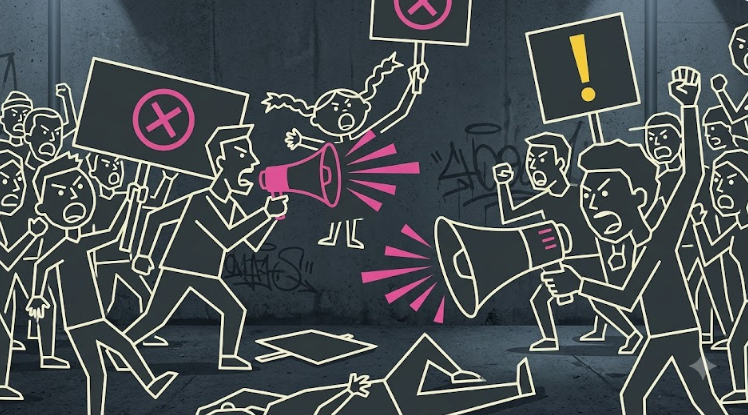
Internal polarisation has become one of the most significant threats to corporate reputation facing organisations today. The fragmentation affecting our societies is increasingly being mirrored within our own workforces. The greatest mistake senior leadership can make is to assume that ideological, social, or workplace tensions will remain behind closed doors.
Earlier this year, the latest edition of the World Economic Forum’s Global Risks Report 2026 reinforced this concern.
The report identifies social polarisation as the fourth most significant short-term global risk and ranks it as the third most pressing threat by 2028. Perhaps even more revealing is the expression it uses to describe this phenomenon: “values at war”.
Table of Contents
Why Internal Polarisation Has Become a Reputational Risk
The World Economic Forum warns that ideological fragmentation, fuelled by disinformation, is pushing societies towards instability. Yet these “values at war” do not remain outside the workplace.
Social divisions are increasingly being replicated within organisations themselves, turning internal polarisation and corporate reputation into issues that can no longer be managed separately. Left unaddressed, internal polarisation becomes a reputational time bomb.
There is no need to resort to conspiracy theories to illustrate this trend. Recent events within major US technology companies provide more than enough evidence and offer a cautionary tale for any global organisation.
Consider the highly publicised examples of employee activism, including protests by Google staff over government AI contracts linked to Project Nimbus, or the divisions that emerged within Netflix and Disney regarding the ethical and political positions adopted by those companies in response to controversial legislation and content-related issues.
What began as heated discussions in private Slack channels or open letters signed by relatively small groups of employees quickly escalated into stories covered by leading international business media. The consequences included industrial action, dismissals, market reactions and, above all, a profound erosion of trust among stakeholders.
When workplace divisions make headlines
This is the new reality of the hyperconnected world in which we operate.
Employees are no longer simply members of the workforce; they are potential activists and some of the most influential ambassadors — or critics — of an organisation’s brand.
When there is a disconnect between what a company promotes in its marketing campaigns and what it tolerates or encourages through its business decisions, employees are often the first to call it out publicly.
The boundary between internal and external communication has effectively disappeared.
In this environment, corporate reputation is shaped as much by internal culture as by external messaging.
Generational shifts and the demand for purpose
At the heart of this internal polarisation lies a fundamental change in the way people view work.
Younger generations do not leave their values at the office door. They increasingly expect their employers to take a position on issues that were once considered off-limits in the corporate sphere: geopolitical conflicts, meaningful sustainability commitments, diversity and inclusion, and social justice, among others.
When leadership attempts to remain neutral on matters that employees regard as fundamental — or, worse still, imposes restrictive policies designed to silence debate — the outcome is often the exact opposite of what was intended.
Basecamp’s decision to ban political discussions in the workplace serves as a notable example. The policy ultimately triggered a significant exodus of talent.
The consequences are clear. Internal polarisation becomes entrenched, corporate culture begins to fracture and reputational damage unfolds in full public view.
An organisation divided internally is, more often than not, an organisation divided externally. From a reputational perspective, it becomes increasingly vulnerable.
How to manage internal polarisation and protect corporate reputation
Against this backdrop, the question senior leaders should be asking is not whether they will face a crisis arising from internal polarisation, but when it will occur and how they intend to respond.
Reputation cannot be improvised. It requires strategic management and courageous leadership.
To mitigate this emerging risk, organisations should embed three key principles within their corporate culture.
- Active listening and an organisational pulse check: internal communication cannot function as a one-way noticeboard. Companies need genuine mechanisms to monitor the ethical and emotional climate within their teams before dissatisfaction spills over onto social media platforms or into the press. Understanding how employees feel is no longer merely an HR responsibility; it is an essential component of corporate reputation management.
- Alignment between purpose and action: if an organisation’s cultural values champion diversity and human rights, its business decisions — including whom it partners with and where it invests — must reflect those commitments. Corporate hypocrisy fuels internal activism in much the same way that greenwashing has damaged corporate credibility in recent years. When organisations fail to align their stated purpose with their actions, internal polarisation and corporate reputation become increasingly difficult to manage.
- Empathetic and transparent leadership: during periods of heightened social tension, chief executives cannot remain hidden behind carefully worded HR statements. Organisations need leaders who are willing to engage openly, acknowledge the complexities behind business decisions and respect differing viewpoints, while establishing clear boundaries grounded in mutual respect.
Leadership visibility, authenticity and transparency have become indispensable tools for protecting corporate reputation.
Protecting corporate ceputation from the inside out
Corporate reputation is built from the inside out.
In an age of radical transparency and crises unfolding in real time, organisational cohesion has become one of the strongest safeguards against reputational harm.
If your company were confronted tomorrow with a large-scale leak of internal communications exposing deep ideological divisions within your workforce, would your executive team be prepared to manage the external consequences?
Protecting internal culture is, now more than ever, about protecting the future of the organisation.
Internal polarisation is no longer a hypothetical risk confined to employee surveys or private conversations. It is a strategic challenge capable of shaping stakeholder trust, influencing business performance and defining an organisation’s reputation.
The companies best equipped to navigate this reality will be those that recognise a simple truth: corporate reputation begins within the organisation itself.
Are you facing a reputational crisis, or looking to prevent one before it happens? At Señor Lobo & Friends, we’re here to listen.